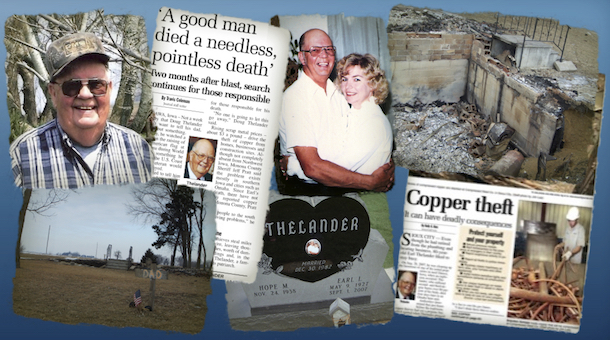
Earl Thelander of Onawa, Iowa, my stepfather for nearly 25 years, sustained second- and third-degree burns over 80% of his body in an August 28, 2007 explosion caused by copper thieves.
Courtesy photo Hope Thelander
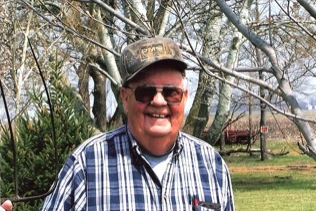
Earl Thelander poses with a pitchfork outside the rural home he and his wife, Hope, were preparing for a renter.
The thieves had stripped propane gas lines from a country home — a house formerly owned by my grandparents — where Earl and my mother, Hope Thelander, had been working and readying for a renter.
Earl was life-flighted to the Clarkson Burn Center at the University of Nebraska Hospital in Omaha, where he died four days later on September 1.
He and my mother would have celebrated their 25th wedding anniversary four months later on December 30. Also left behind were Earl’s six children and five stepchildren, 22 grandchildren, 13 great-grandchildren, four sisters and three brothers, and countless in-laws, loved ones and friends.
Stealing History, and Lives
Located approximately two miles north of Onawa at 20877 Gum Ave. in Monona County, the rural home formerly belonged to my maternal grandparents, Raymond and Dorothy Archer. After my grandfather passed away in January 2004, Mom and Earl moved my grandmother into town to live with them. Grandma had never learned to drive, and Mom already had been making several daily trips out to the farm to check on them and take them grocery shopping or to doctor’s appointments.
Eventually, when it came time to sell my grandparents’ rural home and acreage, Mom and Earl decided they’d like to purchase it from Grandma in efforts to keep it in the family. If no one in the family wanted to live out there, they said, they could always rent it out. Mom was the oldest of my grandparents’ six children (five still living), and all were in agreement it just made sense for “Hope and Earl” to buy the property.
Courtesy photo Hope Thelander
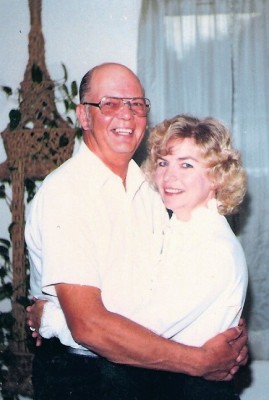
Earl Thelander and Hope Ewing in 1982, the year they were married.
After all, that’s what Mom and Earl did for a living. Throughout their small but tight-knit rural community (pop. less than 3,000), “Earl and Hope Thelander,” who were by no means wealthy, were well-known for their willingness to work hard, together, to buy and fix up older homes and apartment buildings and, if necessary, work with down-on-their-luck tenants so families still had a place to call home.
My sister Kim and her husband Jon jumped at the opportunity to move out to the quiet country home, and while my brother-in-law worked side-by-side with Earl putting new vinyl siding on the home, Mom and my sister wallpapered inside and redid floors.
Every Sunday, in an attempt to “keep tradition going,” numerous family members would trek back out to the farm for “Sunday dinner” at 1 p.m. Kim even learned how to perfect Grandma Archer’s family-favorite recipe we’d all come to expect for Sunday dinner: homemade chicken and noodles. And just like Grandma and Grandpa had always done, Kim and Jon raised their own chickens.
During the summer, 2007, Kim and Jon moved their family back to town. They had kids involved in after-school sports and other activities, and the kids — who’d lived “in town” all their lives but weren’t yet old enough to drive — missed the freedom they’d had visiting with friends.
Mom and Earl never missed a beat. They kept working to improve the home, and Kim and Jon even went out to help as they readied the home for yet a new family.
Copper Thieves in the Night
On August 27, 2010, just before dusk, Mom and Earl — a few months shy of their 25th wedding anniversary — returned to the farm where Earl mowed the acreage and my mother worked inside the house. They returned home for a late dinner, having put in another long, busy day.
At 4 a.m. on August 28, Earl woke my mother and told her he wanted to show her something. He led her outside, where they watched the eclipse of the moon in what they didn’t know had just become the last morning they’d ever spend together.
Hope and Earl Thelander were well known throughout their small community and loved by all.
At 8:30 a.m., Earl headed out to the farm alone to install a new water pump and tank in the home’s basement. Once there, he discovered someone had smashed the kitchen door’s glass and broken into the house. The smell of propane gas drifted through the jagged glass shards and out into the entryway where he stood.
Some time since they’d left the night before and early that morning, thieves had broken in, entered the basement, cut and stolen copper propane and water lines and let the house fill with propane gas.
Earl immediately headed back outside, where he turned off the propane at the tank. He then called my mother and asked her to notify the county sheriff. Mom called the Monona County Sheriff’s Office, and then — along with my sister Kysa and Mom’s youngest sister Beverly and Bev’s husband Dave (who’d been in town visiting with Mom at the time) — drove the two miles out to the farm.
Between approximately 10 – 10:15 a.m., Monona County Sheriff Jeff Pratt and Onawa Police officer Joe Farrens arrived at the farm. At that time, Sheriff Pratt, Officer Farrens, Mom and Earl, Dave Anderson and Kysa Ewing went through the house opening windows in efforts to ventilate the home and ensure no individuals (i.e. perhaps those who had broken in) were found unresponsive in any of the rooms. (They later were told the explosion hadn’t occurred at that particular time because oxygen levels in the home were too low.)
Crime scene evidence included tire tracks in the freshly mown lawn, suggesting the perpetrator(s) drove a small, lightweight pick-up. However, no tire casts were made and no fingerprints taken from the kitchen doorknob (point of entry) because law enforcement officials said neither the sheriff’s office nor the police department currently had deputies or officers qualified or trained in extracting fingerprints.
With the home’s windows and doors now all open and statements provided to law enforcement, Mom and Earl were informed they and other family members could return to town while [law enforcement] finished working the crime scene.
At approximately 11:30 a.m. — insisting it wouldn’t take long and that he wouldn’t be too late for lunch — Earl drove back to the farm to check on the investigation’s process. Earl — whom my mother and family often joked was “80 years old going on 60” — still worked daily on his and my mother’s rental properties and was anxious to get the new water pump and tank installed. He also didn’t know if he’d have time to do it the following day; my mother had found a lump in her right breast, and surgery had been scheduled for a breast biopsy in the morning. It had been weighing heavily on his mind.
When he arrived at the farm, Earl found the acreage abandoned. Law enforcement officials had gone, and no yellow crime scene tape closed off a perimeter, which, if present, would have indicated fire department officials had not yet determined gas fumes at a safe enough level for individuals to enter the residence and/or pass beyond the marked perimeter.
Earl entered the house, and, smelling no propane gas, felt it was safe to resume his work. In the basement, however, he discovered water had leaked onto the floor from the cut and stolen water lines. He set up a squirrel cage blower to help expedite drying the basement floor and plugged it in. The home suddenly exploded, throwing him all the way across the room and into a basement corner.
Altered Lives
Photo by Jody Ewing
For less than $20 worth of stolen copper, thieves claimed the life of Earl Thelander of Onawa, IA, and reduced this family home to nothing more than a pile of rubble and twisted metal.
Back in town, my cousin, Norman Johnson, had just arrived at Mom and Earl’s home, hoping to surprise them with a hot pork tenderloin lunch. By then, Bev and David and my sister Kysa had all gone home, and Norman — a chef at a local restaurant — knew how busy Mom and Earl had been and what lay ahead the following day. He also knew from experience how much they’d appreciate the pork tenderloins and hoped the three of them could enjoy the meal together. Mom and Norman decided to wait for Earl until sitting down to eat.
Mom bent over the kitchen sink and began washing her hair while they waited. She’d just grabbed a towel to wrap around her head when Earl — who’d survived the explosion and forced himself to find the basement steps to crawl out and then drive himself the two miles home to the woman he loved — walked through the door, still in shock, his body and clothes burned and hanging in shreds.
“It just blew,” he said when Mom looked up. Through the hallway’s darkness, Mom’s first thought was that the burglars had returned and attacked him. “What did?” she asked as she went to him. “The house,” he said. “It just exploded.”
Mom didn’t want to wait for an ambulance, so she and Norman got Earl into Mom’s SUV and they took him to the Burgess Memorial Hospital in Onawa. Once there, they immediately began to contact Earl’s six adult children and Mom’s five. Almost all 11 of us lived within close proximity and had time to get to the hospital and talk with Earl — who was remarkably alert and coherent as he described what happened — before he was sedated and then taken by Life Flight to the Clarkson Burn Center at the University of Nebraska Hospital in Omaha.
As we watched the helicopter fly away, his words in the emergency room kept going through my mind. “Your mom is going to think I did this on purpose to steal all the attention away from her surgery tomorrow,” he’d joked. And then, seriously, with eyes not quite so wide beneath his singed eyebrows, “But when I went in, I didn’t smell a thing. I should have known better.”
Our entire family headed down to Omaha to wait.
Earl died four days later on September 1, 2007, surrounded by all his children and stepchildren, nearly two dozen grandchildren and a few great-grandchildren, and my mother — his wife, Hope — who held her face close to his as he opened his eyes to gaze at her one last time before passing from all our lives.
Courtesy KTIV News Channel 4
Eight months after Earl’s death, the family gathered to dedicate two evergreen trees planted in his memory at the Monona County Veteran’s Memorial Museum in Onawa. Doug Kuhlmann of Onawa — who worked for Earl’s plumbing and heating business for 10 years before Earl retired — donated the Norway and Colorado Spruces, while members of the Internet Writing Workshop donated the funds to have the trees moved from Kuhlmann’s home and replanted at the museum.
With Earl’s death came the nation’s firstinnocent fatality resulting from the growing copper theft epidemic.
The estimated value of the copper stolen and exchanged for a good man’s life: less than $20.
Six days after Earl’s funeral, Mom was diagnosed with Stage III, Grade 3, invasive breast cancer. She underwent a mastectomy the following month and spent the next year undergoing chemotherapy and radiation.
Defining Death – in Silence
From the beginning, numerous opinions and debate emerged as to how Earl’s death should or would be classified. He’d died, of course, due to burns he’d suffered in the explosion, but was it a homicide? Involuntary manslaughter? Murder in the second degree? Or, as some wondered, just a plain old accident?
In most states (including Iowa), the county attorney’s office determines what charges will be filed, but, of course, they still must follow the letter of the law. Plea agreements are often a part of the process. For now, however, we were advised it was best to remain focused on finding those responsible rather than what punitive measures might be taken if and when an indictment occurred.
Yet, despite a $5,000 reward the Thelander family offered for information leading to an arrest and conviction in Earl’s case (which could be claimed anonymously), no one ever came forward and no one has ever been charged in his death.
The slideshow video I made in support of Iowa House Study Bill 660.
Copper Thieves Steal Lives A home where five generations once lived, laughed and loved
Defining Murder – in the First Degree
The six-year anniversary of Earl’s death came and went by without a peep, and still without a single conscience bared publicly or privately. Was it possible that those responsible or those who knew who was responsible had also known — perhaps all along — far more about Iowa’s legal code than for which anyone had given them credit? The Monona County Attorney’s office had said first-degree murder charges would be ruled out unless “intent to cause Thelander’s death” could be proven. But, if the offenders had read “Monday’s Our View: Tragic turn” — the Sept. 10, 2007 position piece compiled by the (Council Bluffs) Daily Nonpareil editors in response to the Monona County Attorney’s statement — they would have known the newspaper was absolutely correct.
The Nonpareil said, in part:
Iowa law states “A person who kills another person with malice aforethought either expressed or implied commits murder.” By leaving a dangerous situation posed by the propane leak, the thieves knowingly placed Thelander in mortal danger before the explosion. Since the result was Thelander’s death, the thieves are ultimately responsible and should be charged with murder. Anything less would be a travesty of justice and an insult to Thelander’s family.
Anything less, I might also add, would breach the very Iowa codes upon which our state’s criminal law is based and practiced and wherein violators prosecuted. Though many Iowa codes come into play in regards to circumstances surrounding Earl’s death, they are threaded together so seamlessly it would be difficult for one to not see the obvious legal conclusion. In essence:
Iowa Code 702.12 – Occupied structureis clearly defined as any building, structure, appurtenances to buildings and structures, land, water or air vehicle, or similar place(s) adapted for overnight accommodation of persons, or occupied by persons for the purpose of carrying on business or other activity therein. Perhaps most importantly, IA Code 702.12 goes on to state that these structures are considered an “occupied structure” whether or not a person is actually present [when the burglary occurs].
It should also be mentioned here that with Forcible Felonies (IA Code Section 702.11), sentences cannot be suspended; there is no court discretion. This includes charges for murder and voluntary manslaughter, felonious child endangerment, sexual abuse (except between spouses), kidnapping, robbery, arson in the first degree, and last, but certainly not least, burglary in the first degree.
Thus, should those responsible for Earl’s death be apprehended and charged, Iowa’s criminal code allows for no discretion and nothing less than a charge of Murder in the first degree.
About Earl Thelander
Earl Leland Thelander was born May 9, 1927, in Arcadia, Nebraska, the son of Henry and Amanda (Gestrine) Thelander. He grew up in Polk, Neb., and graduated in Stromsburg, Neb., in 1944. After graduation, he went into the U.S. Coast Guard. After his discharge, he began farming and farmed for several years.
On Feb. 3, 1950, he married Berniece Obrist and to this union six children were born. They lived and farmed in the Osceola area until he began working for Mamco Manufacturing Company in Stromsburg. He later transferred to Honeggars Manufacturing Company in Onawa. After they closed, he went to work for Onawa Propane and in 1967, started his own business, Thelander’s Plumbing and Heating in Onawa. He was blessed to have his entire family involved in the business.
On Dec. 30, 1982, he married Hope Ewing in Onawa. They lived in Onawa, where he enjoyed doing yard work, gardening, watching the birds and squirrels on his back deck and his “coffee time.” The couple owned and operated Thelander’s Softener Service and Thelander’s Rentals. They owned the Monona Hotel and the Park Hotel and many other rental properties over the years.
Earl was a member of First Christian Church of Onawa and helped with Boy Scouts when his sons were younger. He enjoyed spending time with his family and was also loved by the entire community. He is greatly missed.
Earl was laid to rest at the Onawa Cemetery in Monona County.
He is survived by his wife of 25 years, Hope Thelander of Onawa; six children, Doug Thelander of Castana, Iowa, Byron (Sharon) Thelander of Onawa, Vicki (Otis) Gray of Onawa, Cindy (Doug) Miller of Sioux City, Gaylen (Ruthie) Thelander of Madera, Calif., and Brad Thelander of Sergeant Bluff; five stepchildren, Kim (Jon) Berens, Jody (Dennis Ryan) Ewing, Lori (Steve) Mathes, Kysa Ewing and Brett (Deb) Ewing, all of Onawa; 22 grandchildren; 13 great-grandchildren; four sisters, Betty (Clarence) Nielsen of Stromsburg, Neb., Darlene Gordon of York, Neb., Jean Twarling of Sidney, Neb., and Wanda (DeLano) Ahlquist of Loveland, Colo.; three brothers, Doyle (Gina) Thelander of Lincoln, Neb., Darwin (Sarah) Thelander of Peel, Ark., and Dean (Ginger) Thelander of Harrison, Ark.; and numerous cousins, nieces and nephews.
He was preceded in death by his parents; a grandson, Bobby Gray; his father-in-law, Raymond Archer; a sister-in-law, June Ooten; and three brothers-in-law, Hal Gordon, Glenn Twarling and Dan VanWinkel.
Earl was buried at the Onawa Cemetery, Onawa, in Monona County.
On Thursday, February 14, 2008, the Iowa House Judiciary Committee assigned a Subcommittee to House Study Bill 660 — An Act relating to scrap metal transactions, prohibiting certain sales and imposing criminal penalties. While supported by organizations such as the IA Assn. of Electric Cooperatives, the IA Utility Assn. and the International Brotherhood of Electrical Workers, the bill met with resistance from organizations such as the IA Assn. of Business and Industry and Alter Trading Corporation, and died after failing to make the Iowa House’s March 7 first funnel date. See the list of companies/lobbyist names that were for or against Iowa’s bill.
A number of other states, however, not only passed in that same session House and Senate resolutions similar to Iowa’s failed HSB 660, but expanded the scope of these laws from specifically copper to more general nonferrous metals. See State Copper and Scrap Metal Theft Statutes. Ironically, Iowa — with the U.S.’s only known innocent copper theft fatality to date — remained one of only three states still without copper and scrap metal theft statutes. The other two states were North Dakota and Alaska.
On Saturday, February 16, 2008, the Onawa Volunteer Fire Department conducted a controlled burn of all that remained of the Archer/Thelander rural home.
Courtesy SafeguardIowa.org
The Department of Justice and Homeland Security, along with other organizations, hosted a February 2012 webinar on copper theft’s impact on critical infrastructures. Slide #42, above, focused solely on Earl Thelander’s (still unsolved) homicide.
On February 28, 2012, the State of Iowa’s Department of Justice, Iowa Homeland Security and Emergency Management, the Iowa Dept. of Public Safety’s Division of Intelligence, MidAmerican Energy, the Iowa Law Enforcement Intelligence Network and four other organizations hosted a webinar on how copper theft affects critical infrastructure and how this particular crime is investigated and prosecuted. The webinar featured 96 slides, with slide #42 focused solely on Earl Thelander’s case. The slide is titled, “Iowa Example: Homicide.” View the full webinar in PDF format.
On Thursday, April 19, 2012, Iowa Gov. Terry Branstad signed legislation requiring tracking of scrap metal sales to help combat theft. House File 2399 requires all transactions of $50 or more to be paid by check or electronic transfer and creates a paper trail to help law enforcement agencies investigating the theft of copper or other metals. In passing the measure, backers cited situations where a rural electric cooperative in northwest Iowa sustained a $35,000 loss due to copper theft and vandalism while thieves in Clinton took about $2,000 of copper wiring from a Christmas lighting display the previous November. The bill’s critics argued that the $50 threshold was too low given current scrap metal prices. Download HF2399 here (PDF format).
On June 23, 2013, more than a year after the new law passed, police told the Sioux City Journal it hadn’t put a dent in raids on construction sites, rural farmsteads and businesses.
I find it really incredible, that if the local agencies had no one properly trained to process the crime scene. This did not take place in the 1950’s, 60’s or 1970’s, but in 2007.
They should had an agreement, with the DCI, another law enforcement agency, FBI or whoever to someone process the crime scene.
Also, they should have also had the building restricted and posted no entry until the fire department of state fire marshal could certify that it was safe for entry.
The FBI has mobile crime scene teams that are trained, and could have been requested.
Jodi! My heart breaks for you & your families loss!
What a senseless & sick thing for a person or people to do!
They didn’t care that that home filled with gas & would kill people!!
They just wanted money.
I’m so so sorry!
As always praying for justice for him, you & your family & loved ones!
He is always with you & I’m sure he is so proud of you & who you are & what you have done!
Thank you for all you do! I hope the person or persons responsible are brought to justice.. I’m sure you’re step father knew my great grandpa and or my grandpa.
Pam, I truly do consider all of us family! Wouldn’t it be wonderful for all of us to get together one day and meet each other in person!? That would be awesome!
It’s hard to forget because there were so many years where Earl’s birthday fell on Mother’s Day. I still can’t believe they haven’t yet made an arrest.
Happy Birthday in Heaven, Grandpa. Thinking about and missing you so very much, always. Wish I could give you one more hug and tell you how much I love you… Always, Always in my heart. <3
There’s so many copper thieves in NW Iowa! My step dad is a scrapper and weirdos and creeps come beg for scrap from him all the time! And he’s had copper stolen from him too! It’s scary because you never know how desperate ppl get for a little bit of copper cash! I pray this is solved soon!!
Sheriff Pratt had primary jurisdiction. He did in fact have deputies trained in basic forensics i.e fingerprint lifting. Every academy class is taught that. The truth is he thought it not important to equip his deputies with basic field equipment to lift prints. You, the people, voted him in…vote him out if you think he is’t doing his job. It is not accurate nor fair and equitable to blame Officer Farrens, he was simply following the sheriff who apparently mishandled this incident and more than likely many more. Remember, politicians engage in politics.
“Between approximately 10 – 10:15 a.m., Monona County Sheriff Jeff Pratt and Onawa Police officer Joe Farrens arrived at the farm…………. When he arrived at the farm, Earl found the acreage abandoned. Law enforcement officials had gone, and no yellow crime scene tape closed off a perimeter, which, if present, would have indicated fire department officials had not yet determined gas fumes at a safe enough level for individuals to enter the residence and/or pass beyond the marked perimeter.”
If Onawa Police officer Joe Farrens and Monona County Sheriff Jeff Pratt had done their jobs and marked the area with a yellow crime scene tape, this tragedy never would have happened. Joe Farrens in particular has been involved in many incidences that have harmed the very citizens he is supposed to protect and serve. It’s scandalous he still has a badge.
Thanks so much to everyone for the heartfelt comments! Though six years may seem like only yesterday to us, there are so many hundreds of other cases out there several decades old. Whether grouped under “homicides” or “missing persons” cases, no two victims’ stories are ever the same. Cecil Gaddy. John Jeffery. Lee Rotatori. I think the endings to their stories are closer than we think. Thanks to all for taking the time to comment. Jody at ICC, who still can’t remember how to type the text to make a “heart” shape appear – only the happy face. (And there’s always happiness to be found if we just reach out and grab it when it comes our way. It’s what our loved ones would have wanted us to do.) :-) G’night, all!
What a beautiful tribute! Thank you for sharing it with us. Thinking of you this weekend, as you remember, honor, miss, mourn, and celebrate your “Dad Earl,” Jody…
I am so very sorry, Jody. It has been a rough month of losses. I can only imagine how you and your mother and family feel. You are in my thoughts and prayers. With love, Kerry at I.C.C.
Jody, I am so sorry for your loss. What those thieves really stole was an entire families history. Your mom and step-dad had a special love and Earl taking your Mom out to watch the eclipse just proves it,
Why are the good ones always taken? I pray your Mom is cancer free and finds solace in the wonderful memories she has of Earl. God bless your family and friends and may the cowards that set in motion the death of a good man never feel safe again.
Lori, thank you so much for taking time to comment on my stepfather’s case. Earl really did have a wonderful relationship with my mom, as he did with all his children, stepchildren, and grandchildren. He was so proud of all his kids and their chosen lines of work, and his two oldest boys have carried on the Thelander Plumbing & Heating tradition with “Doug Thelander Plumbing” and “Byron Thelander Heating & Cooling.”
Yes, my mother continues to remain cancer free. We all have our own very special memories of Earl, and are hopeful one day the person or persons responsible for his death will come forward on their own rather than wait and express sorrow for their actions only after being caught. Character far outweighs cowardice.
Thank you again for writing. Your words meant more than you know.
Thank you so much for your kind words about both my stepdad and the website! Day after tomorrow (May 9) would have been his birthday, and we all still miss him so very much. When I think of him, I remember how he always leaned his head back and just slightly to the side whenever he laughed. (Which he did often.) I miss that. Thank you again!
Jody: I am so sorry for the loss of your step-dad. He and your Mom sound like a great team. I cannot imagine how much you all must miss him. What a tragic outcome of the theft of 20 dollars worth of copper …
Thanks so much for your comment, Teri. We’re all still hopeful justice will be served. (And still hoping Iowa will eventually take it seriously enough to pass some decent scrap metal legislation.) I appreciate your taking the time to write.
We encourage thoughtful discussion here but ask that comments remain civilized and constructive … i.e. without personal attacks or name-calling. Be respectful of others and remember that victims' family members visit these pages, too. If you'd like to provide us with information regarding a suspect or have other sensitive details to relay, please email us directly. Thank you in advance.

 Courtesy photo Hope Thelander
 Courtesy photo Hope Thelander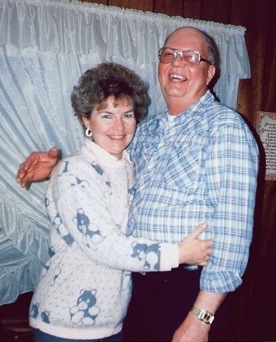
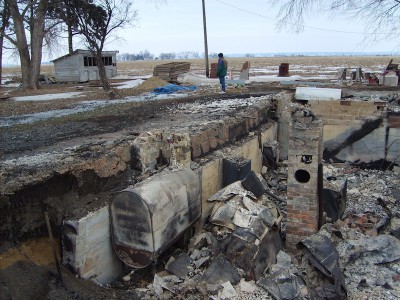 Photo by Jody Ewing
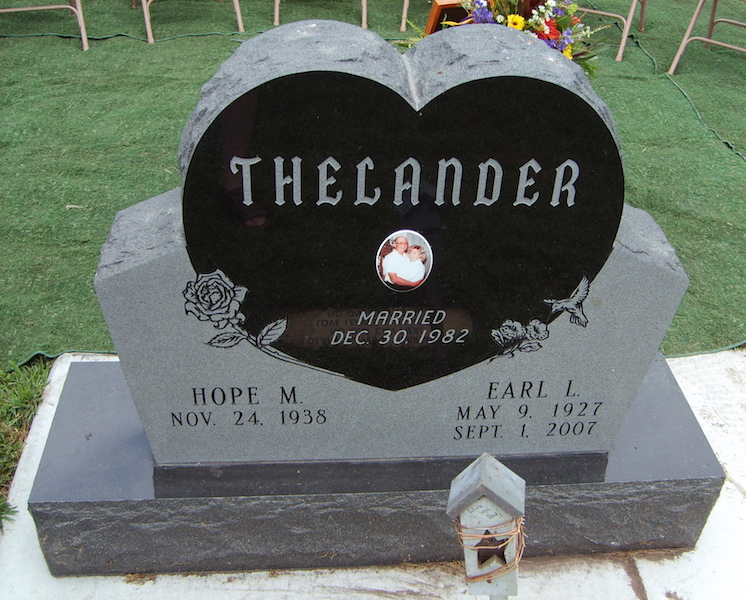 Earl was laid to rest at the Onawa Cemetery in Monona County.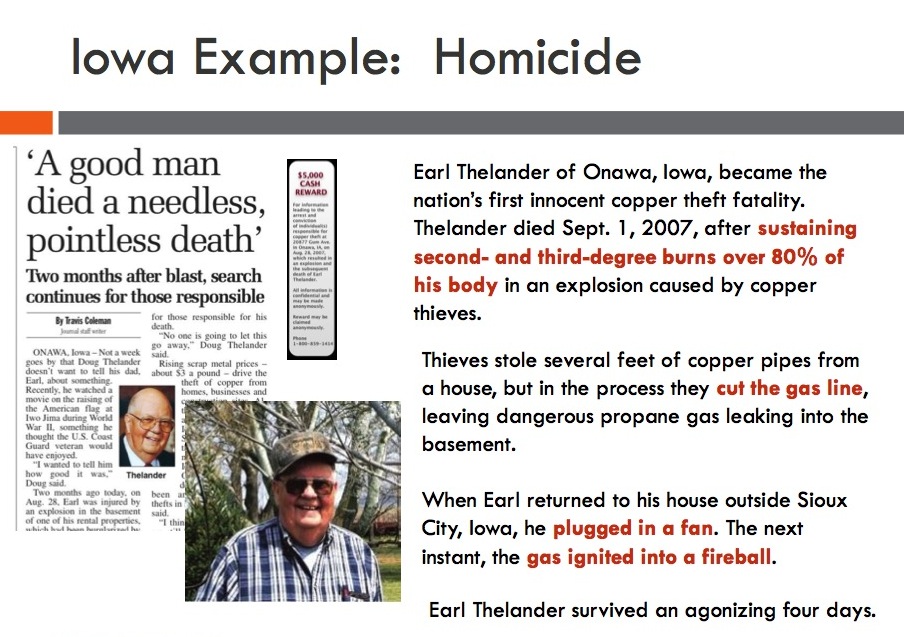

Extreme negligence on the part of police department. I’d sue the hell out of them.
I find it really incredible, that if the local agencies had no one properly trained to process the crime scene. This did not take place in the 1950’s, 60’s or 1970’s, but in 2007.
They should had an agreement, with the DCI, another law enforcement agency, FBI or whoever to someone process the crime scene.
Also, they should have also had the building restricted and posted no entry until the fire department of state fire marshal could certify that it was safe for entry.
The FBI has mobile crime scene teams that are trained, and could have been requested.
Jodi! My heart breaks for you & your families loss!
What a senseless & sick thing for a person or people to do!
They didn’t care that that home filled with gas & would kill people!!
They just wanted money.
I’m so so sorry!
As always praying for justice for him, you & your family & loved ones!
He is always with you & I’m sure he is so proud of you & who you are & what you have done!
Thank you for all you do! I hope the person or persons responsible are brought to justice.. I’m sure you’re step father knew my great grandpa and or my grandpa.
(((HUGS))) Jody!! <3
In a sad way, we are family now! You and your family are always in my thoughts <3
Yes it would!
Thank you so much, Pam! Means a lot to me!
Pam, I truly do consider all of us family! Wouldn’t it be wonderful for all of us to get together one day and meet each other in person!? That would be awesome!
Thinking of you
I can’t believe this hasn’t been solved either. So sad.
I remembered!!!!!
It’s hard to forget because there were so many years where Earl’s birthday fell on Mother’s Day. I still can’t believe they haven’t yet made an arrest.
Very big Hugs to you Jody. My heart and thoughts are with you always.
Big hugs Jody.
Happy Birthday in Heaven, Grandpa. Thinking about and missing you so very much, always. Wish I could give you one more hug and tell you how much I love you… Always, Always in my heart. <3
Absolutely!
Thanks so much, Alicia!
Prayers to the family…
There’s so many copper thieves in NW Iowa! My step dad is a scrapper and weirdos and creeps come beg for scrap from him all the time! And he’s had copper stolen from him too! It’s scary because you never know how desperate ppl get for a little bit of copper cash! I pray this is solved soon!!
Sad!
I can’t believe this hasn’t been solved. How sad. Prayers.
Sheriff Pratt had primary jurisdiction. He did in fact have deputies trained in basic forensics i.e fingerprint lifting. Every academy class is taught that. The truth is he thought it not important to equip his deputies with basic field equipment to lift prints. You, the people, voted him in…vote him out if you think he is’t doing his job. It is not accurate nor fair and equitable to blame Officer Farrens, he was simply following the sheriff who apparently mishandled this incident and more than likely many more. Remember, politicians engage in politics.
God bless this family
I still think of him and what happened to him. Can’t imagine the culprit not getting caught. May God bless your family.
(((Hugs))) Jody!
Very heartbreaking I hope they catch the person or persons who did this. RIP EARL
Heartbreaking… Surely someone has an idea of who committed this crime.
I’m sorry for your family’s lost but I would have to say local law enforcement and local fire Dept are also to blame for this death as well
I hope they find them and charge them with murder.
Thinking of you…
Im so sorry ♡
so sad he sounds like a wonderful person i hope they find who did this and there is justice
Thinking of you! I pray you get answers very soon. ♡
God bless his soul.
Prayers for the family and prayers someone comes forward.
“Between approximately 10 – 10:15 a.m., Monona County Sheriff Jeff Pratt and Onawa Police officer Joe Farrens arrived at the farm…………. When he arrived at the farm, Earl found the acreage abandoned. Law enforcement officials had gone, and no yellow crime scene tape closed off a perimeter, which, if present, would have indicated fire department officials had not yet determined gas fumes at a safe enough level for individuals to enter the residence and/or pass beyond the marked perimeter.”
If Onawa Police officer Joe Farrens and Monona County Sheriff Jeff Pratt had done their jobs and marked the area with a yellow crime scene tape, this tragedy never would have happened. Joe Farrens in particular has been involved in many incidences that have harmed the very citizens he is supposed to protect and serve. It’s scandalous he still has a badge.
Thanks so much to everyone for the heartfelt comments! Though six years may seem like only yesterday to us, there are so many hundreds of other cases out there several decades old. Whether grouped under “homicides” or “missing persons” cases, no two victims’ stories are ever the same. Cecil Gaddy. John Jeffery. Lee Rotatori. I think the endings to their stories are closer than we think. Thanks to all for taking the time to comment. Jody at ICC, who still can’t remember how to type the text to make a “heart” shape appear – only the happy face. (And there’s always happiness to be found if we just reach out and grab it when it comes our way. It’s what our loved ones would have wanted us to do.) :-) G’night, all!
What a beautiful tribute! Thank you for sharing it with us. Thinking of you this weekend, as you remember, honor, miss, mourn, and celebrate your “Dad Earl,” Jody…
♥
Thinking of you always! What a wonderful job you did, putting so much effort into making his voice heard! So proud of you!!! <3
Thoughts and prayers are with you…
Five years… My thoughts are with you, Jody.
I am so very sorry, Jody. It has been a rough month of losses. I can only imagine how you and your mother and family feel. You are in my thoughts and prayers. With love, Kerry at I.C.C.
Prayers with you always Jody, as I know yours are always with all of us who are living this same hell…{{Hugs}} to You and Your Family!
Praying Jody and Thelander family that whoever is responsible for this will be caught and punished accordingly.
video brought tears to my eyes , god bless
Jody, I am so sorry for your loss. What those thieves really stole was an entire families history. Your mom and step-dad had a special love and Earl taking your Mom out to watch the eclipse just proves it,
Why are the good ones always taken? I pray your Mom is cancer free and finds solace in the wonderful memories she has of Earl. God bless your family and friends and may the cowards that set in motion the death of a good man never feel safe again.
Lori, thank you so much for taking time to comment on my stepfather’s case. Earl really did have a wonderful relationship with my mom, as he did with all his children, stepchildren, and grandchildren. He was so proud of all his kids and their chosen lines of work, and his two oldest boys have carried on the Thelander Plumbing & Heating tradition with “Doug Thelander Plumbing” and “Byron Thelander Heating & Cooling.”
Yes, my mother continues to remain cancer free. We all have our own very special memories of Earl, and are hopeful one day the person or persons responsible for his death will come forward on their own rather than wait and express sorrow for their actions only after being caught. Character far outweighs cowardice.
Thank you again for writing. Your words meant more than you know.
Jody
Wow Jody! Had no idea Earl was your dad. Condolences. What a sad reason for such a great website doing great things, a wonderful memorial.
Thank you so much for your kind words about both my stepdad and the website! Day after tomorrow (May 9) would have been his birthday, and we all still miss him so very much. When I think of him, I remember how he always leaned his head back and just slightly to the side whenever he laughed. (Which he did often.) I miss that. Thank you again!
Thank you, Vicki, Rhonda, and Nancy! How did I not see this post earlier? So sorry for the delayed thank yous!
Sorry to hear this Jody.
I’m so sorry for the loss of Jody’s stepfather. So very wrong! :(
Jody: I am so sorry for the loss of your step-dad. He and your Mom sound like a great team. I cannot imagine how much you all must miss him. What a tragic outcome of the theft of 20 dollars worth of copper …
I pray your family finds justice.
Thanks so much for your comment, Teri. We’re all still hopeful justice will be served. (And still hoping Iowa will eventually take it seriously enough to pass some decent scrap metal legislation.) I appreciate your taking the time to write.